Can PCOS-Related Infertility Be Treated Without IVF?
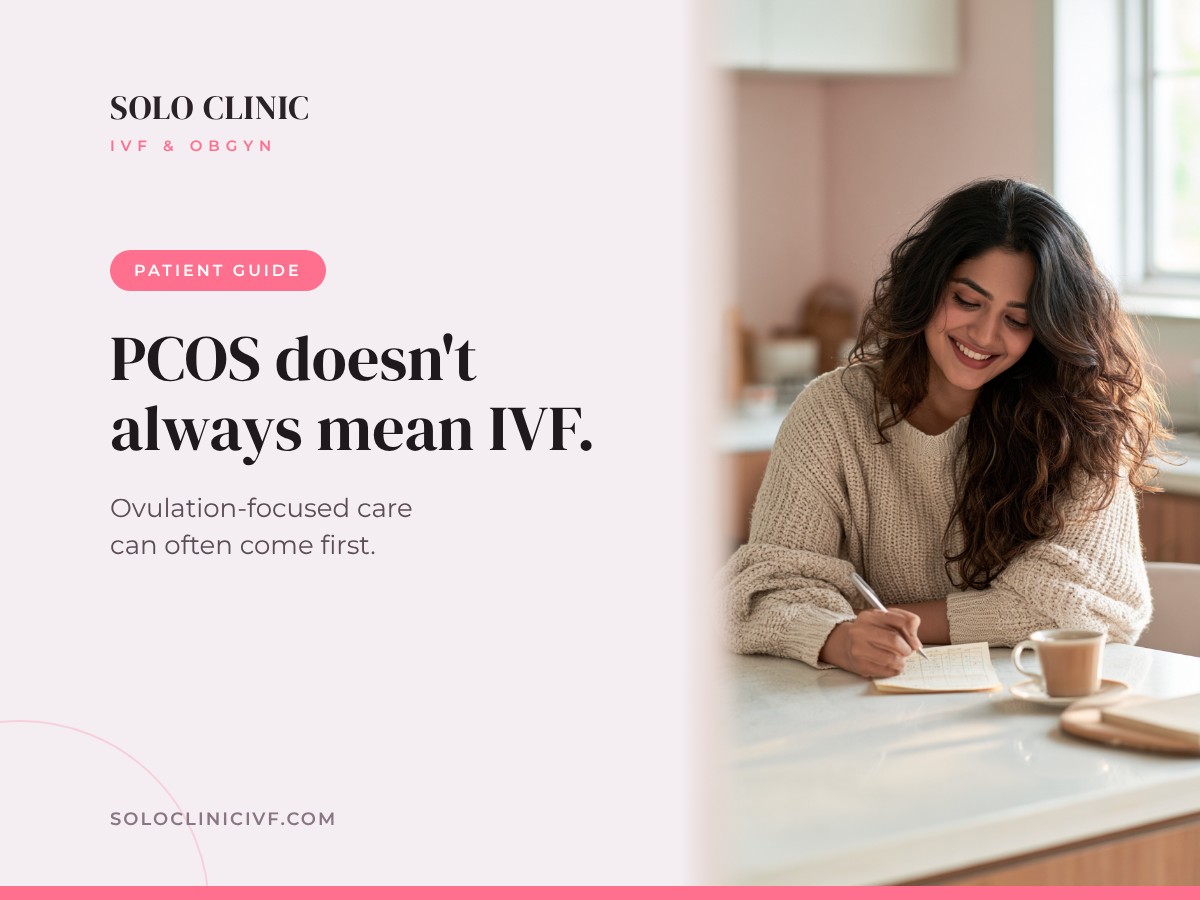
Learn how ovulation induction, lifestyle and targeted fertility care may help women with PCOS/PMOS conceive before IVF is needed.
Does a PCOS diagnosis mean IVF is inevitable?
No. Polycystic ovary syndrome (PCOS), referred to as polyendocrine metabolic ovarian syndrome (PMOS) in newer international terminology discussions, is commonly associated with irregular or absent ovulation. Many women may conceive with targeted ovulation treatment without IVF. Others have additional infertility factors that change the plan. The diagnosis itself does not determine the treatment.
What should be assessed first?
A fertility consultation should document cycle patterns, symptoms of androgen excess, metabolic health, weight-related and other health concerns where relevant, and the couple’s reproductive history. A semen analysis is essential when a male partner is involved. Tubal assessment is individualised according to risk and proposed treatment. Other causes of irregular periods, such as thyroid disease or hyperprolactinaemia, should be evaluated when clinically indicated.
What is the first-line approach for anovulatory infertility?
For women with PCOS/PMOS who are not ovulating and have no other infertility factors, international evidence-based guidance recommends letrozole as a first-line pharmacological ovulation-induction option where permitted and clinically appropriate. Treatment requires appropriate exclusion of pregnancy, counselling and monitoring. Metformin or other agents may have roles in selected circumstances, but choices should be based on the full phenotype, not a standard prescription for every woman.
How does general health fit into fertility planning?
Preconception care should address blood pressure, glucose tolerance or diabetes risk, nutritional needs, sleep, physical activity and other relevant health conditions. Lifestyle advice should be non-stigmatising and realistic. Some patients benefit from improvements in metabolic health, but needing medication or assisted reproduction is not a personal failure.
When should IUI or IVF be considered?
If ovulation induction does not lead to pregnancy within an appropriate time frame, the plan should be reassessed. IUI may be considered for selected patients depending on tubes, sperm and other findings. IVF may be appropriate when additional male or tubal factors exist, fertility treatment has failed, age changes urgency, or circumstances justify escalation. Unnecessary repeated ovulation-induction cycles should be avoided.
What is the difference between PCOS and ovarian reserve?
Women with PCOS often have many small antral follicles and may have elevated AMH. This does not guarantee high egg quality or pregnancy. During IVF, an excessive response can increase ovarian hyperstimulation risk, so protocol selection and safety measures are important. Treatment should be based on individual endocrine and reproductive characteristics.
Frequently Asked Questions
Can I conceive naturally with PCOS?
Yes. Some women ovulate spontaneously, and others may conceive after evidence-based management of anovulation.
Is letrozole always appropriate?
No. It is a first-line option for selected anovulatory patients after proper assessment and counselling.
Will metformin alone always restore fertility?
No. It has selected indications, but may be less effective than dedicated ovulation-induction treatments for achieving pregnancy.
Related reading
- When to consult an infertility specialist and what tests both partners need
- IUI or IVF: when to move treatment
- Which doctor should I consult for infertility?
About the Expert
Dr. Sunita Rajesh Tandulwadkar is a Pune-based gynaecological endoscopic surgeon and IVF consultant; President, Indian Society of Assisted Reproduction (2026–2028), and 63rd President of FOGSI (2025). Her clinical work integrates reproductive surgery, assisted reproduction and complex fertility care.
References
- 2023 International Evidence-Based PCOS/PMOS Guideline (terminology and recommendations as updated online)
- ASRM, Fertility Evaluation (2026)
No outcome is guaranteed. Content is educational and not a substitute for individual consultation.