Can I Conceive if I Have Both Endometriosis and Diminished Ovarian Reserve?
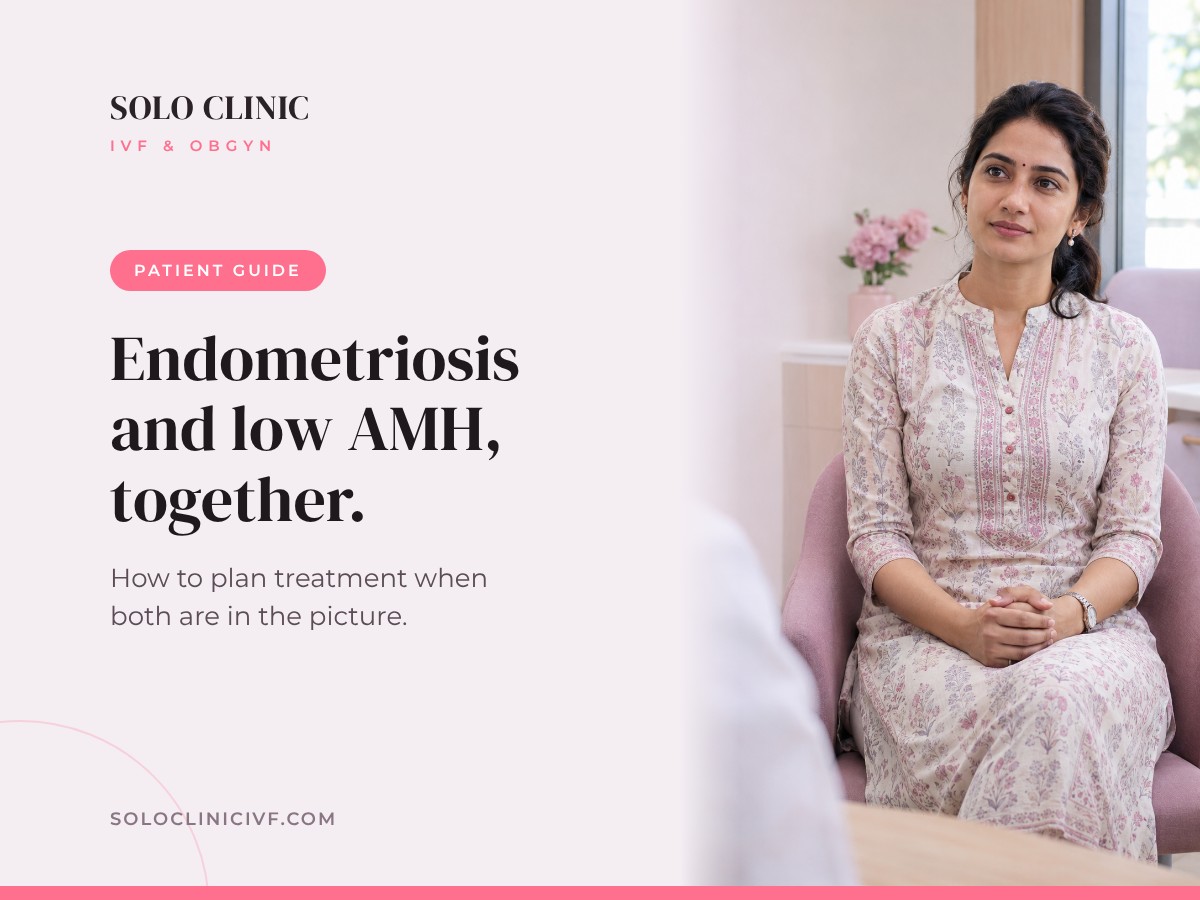
Explore how endometriosis and low AMH interact, when ovarian surgery may be avoided, and how to plan fertility treatment.
Why is this combination especially important?
Endometriosis may be associated with pain, ovarian endometriomas, inflammation, adhesions and tubal factors. Diminished ovarian reserve may reduce the number of eggs expected during stimulation. When these coexist, treatment needs to address disease and fertility without using up reproductive time or unnecessarily harming ovarian tissue. The key question is not simply whether an endometrioma can be removed, but whether doing so is likely to improve the overall care plan.
What should be assessed before choosing treatment?
A careful review includes age, infertility duration, symptoms, previous ovarian surgery, AMH and antral follicle count, tubal status, semen parameters and expert pelvic imaging. Specialist ultrasound may map endometriomas and deep disease; MRI may be useful for selected complex cases. A normal imaging study does not exclude all superficial disease. Assess the uterus and any coexisting adenomyosis when clinically relevant.
Should the endometrioma always be removed before IVF?
No. ESHRE does not recommend routine endometrioma surgery before ART solely to improve live-birth rates because benefit has not been shown and the operation may reduce ovarian reserve. Surgery may still be appropriate when pain is significant, cyst features are concerning, follicle access is difficult or other disease needs treatment. Repeat ovarian surgery deserves especially careful consideration.
When can IVF be considered earlier?
A woman with advancing age, limited ovarian response, damaged tubes or other factors may reasonably consider moving to IVF without waiting for surgery that has no clear reproductive benefit. Stimulation planning should be individualised, including realistic expectations about egg yield and potential need for more than one cycle. A lower AMH value does not prove that pregnancy is impossible or that donor eggs are obligatory.
What if pain is the main concern?
Fertility treatment and pain management have overlapping but not identical goals. Hormonal suppressive treatments may relieve endometriosis-related pain, but they generally prevent attempts at conception while being taken. In selected patients, coordinated medical, surgical and fertility care may provide the best balance. A patient should be told what each treatment is intended to achieve.
How to protect reproductive options
Ask whether surgery could affect remaining ovarian tissue, whether fertility preservation deserves discussion before a planned ovarian operation, and how much time treatment will take. There is no universal requirement to freeze eggs for every endometriosis patient; the benefit is uncertain and decisions depend on disease severity, ovarian response, age and resources.
Frequently Asked Questions
Does endometriosis make low AMH even worse?
The disease, endometriomas and previous surgery can all be relevant to ovarian reserve, but each case requires individual assessment.
Can I undergo IVF with an endometrioma still present?
Often yes, when there is no separate surgical indication. The clinical team must assess safety and retrieval access.
Should I have surgery or IVF first?
The best sequence depends on pain, disease extent, age, reserve, prior operations, tubes and semen findings.
Related reading
- Endometriosis and infertility: when surgery helps and when to move to IVF
- Low AMH and fertility: what it really means for your chances
- Own eggs after 40, or donor eggs?
- Choosing an IVF consultant for complex infertility
About the Expert
Dr. Sunita Rajesh Tandulwadkar is a Pune-based gynaecological endoscopic surgeon and IVF consultant; President, Indian Society of Assisted Reproduction (2026–2028), and 63rd President of FOGSI (2025). Her clinical work integrates reproductive surgery, assisted reproduction and complex fertility care.
References
- ESHRE Endometriosis Guideline (2022)
- ASRM, Ovarian Reserve Testing (2020)
- ASRM, Fertility Evaluation (2026)
No outcome is guaranteed. Content is educational and not a substitute for individual consultation.